


Key Takeaways
- Your tear film can weaken over the course of the day, and screen time contributes to this process.
- Protein and oil deposits on lenses cause a gritty feeling.
- An incorrect lens fit or outdated material can quietly drain your comfort all day long.
- Small hygiene habits, like skipping the rub step, make discomfort worse over time.
- A contact lens exam can pinpoint fit, material, and dry eye issues you may not know you have.
Your Contacts Felt Fine This Morning
You put your contacts on without a second thought. A few hours later, your eyes feel dry, scratchy, or foggy. By evening, you’re counting down the minutes until you can take them out. Sound familiar? The good news is that end-of-day contact discomfort usually has a clear cause.
Most contact lens discomfort comes down to a few fixable factors: dryness, deposit buildup, lens fit, lens material, and wear habits. Once you know which one is affecting you, there are ways that you can potentially improve how your lenses feel.
At Total Vision Financial District, we help contact lens wearers deal with discomfort every day. If you’ve been struggling recently, a contact lens exam is often the fastest way to get answers.
The Most Common Reasons Your Contacts Feel Uncomfortable
Dryness That Builds Throughout the Day
Your eyes rely on a thin layer of tears to keep contact lenses hydrated and comfortable. That layer, called the tear film, can weaken over hours of lens wear. By afternoon, it may not be doing its job as well as it did at 8 a.m.
Screen time tends to make this problem worse. When you’re focused on a monitor or phone, you blink much less often. Because blinking refreshes your tear film, fewer blinks means more dryness. Add air conditioning or indoor heating to the mix, and the air around you is pulling moisture away from your eyes and lenses all day.
Deposit Buildup on Your Lenses
Proteins and oils from your tear film settle onto your contact lenses throughout the day. This is completely normal, but the buildup adds up. By evening, that film on your lenses can make your vision look hazy and your eyes feel gritty or irritated.
If you’re also dealing with allergies, this can compound dry eye problems. Pollen and airborne debris stick to lenses, too, making already sensitive eyes feel worse as the day goes on. If your eyes tend to feel particularly irritated during allergy season, contacts for sensitive eyes might be able to help.
Your Lens Fit & Material May Be the Problem
Why Fit Matters More Than You Think
Every eye has its own curvature and shape. A contact lens that doesn’t match the shape of your eye can shift or hug your eye too tightly, limiting how much oxygen reaches your cornea.
Fit evolves over time, too. If you haven’t updated your prescription recently, your eyes might have changed since your last appointment.
When Your Lens Material Isn’t Working for You
Not all contact lens materials handle moisture the same way. For instance, older hydrogel lenses tend to dry out faster than newer options. Silicone hydrogel lenses allow significantly more oxygen to pass through to the eye, which can make a real difference in how your eyes feel after eight or more hours of wear. If you’ve been wearing the same brand for years, your lenses may simply not match where your eyes are now. The different contact lens types available today vary widely in how they handle oxygen flow and moisture retention, so there’s often a better fit waiting to be found.
Habits That Make End-of-Day Discomfort Worse
Wearing Your Contacts Too Long
Your cornea needs oxygen to stay healthy, and it gets most of that oxygen directly from the air, not your bloodstream. Wearing lenses beyond their recommended schedule limits that supply. Over time, over-wear contributes to irritation, redness, and a higher chance of serious complications.
Sleeping in lenses raises infection risk significantly. Even lenses marketed as extended-wear carry real risks when worn overnight without guidance from your eye doctor.
Hygiene Mistakes That Add Up
Small habits have a bigger impact on comfort than most people realize. For example, if you don’t rub your lenses down when you clean them, you’re likely to leave a surprising amount of protein buildup behind, even if you use a no-rub solution. Old lens cases are another common problem. Bacteria build up inside cases over time, and contaminated cases can transfer that bacteria straight to your eyes. Always replace your case regularly, and never rinse lenses or your case with tap water.
Warning Signs That Need More Than a Rest Day
Most end-of-day discomfort improves once you take your lenses out and give your eyes a break. Some symptoms, though, point to something that rest alone won’t fix. Pay attention if you notice:
- Sharp pain, discharge, or sensitivity to light after lens removal.
- Redness or blurry vision that doesn’t clear up after resting without lenses.
- Discomfort in only one eye that keeps coming back.
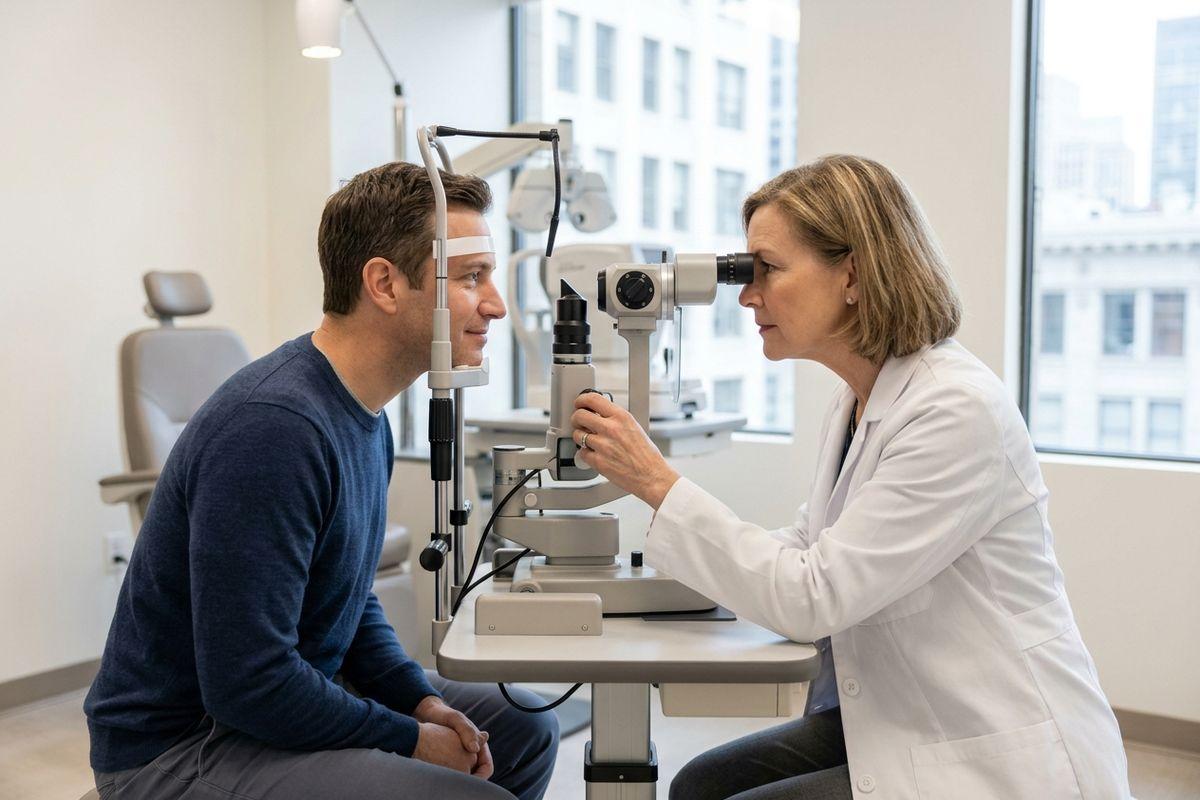
These are all signs that you should pay a visit to our team at Total Vision Financial District. We can use a slit lamp to examine the surface of your eyes and check for corneal scratches, infections, and other issues that aren’t visible otherwise. Corneal problems respond much better to prompt care, so it’s always wise to act quickly.
If you’re ever unsure whether your symptoms qualify as urgent, our emergency eye care page can help you decide when to act quickly.
What a Contact Lens Exam Can Do for Your Comfort
Fitting, Material and Replacement Schedule Adjustments
A contact lens exam goes deeper than just checking your prescription. Your eye doctor evaluates how your lenses fit your eye, whether the material suits your needs, and whether a different replacement schedule might help boost your comfort.
Daily disposable lenses, for example, reduce deposit buildup and limit allergen exposure because you start each day with a fresh lens. Switching brands or materials is also often an effective way to address chronic end-of-day dryness.
Dry Eye Treatment & Everyday Tips
If dryness is your main concern, there are practical steps that help between visits:
- Rewetting drops can refresh your eyes during the day.
- The 20-20-20 rule helps give your eyes a break. Every 20 minutes of screen time, look at something 20 feet away for 20 seconds.
- Keep yourself hydrated and try applying warm compresses during the day.
If dryness persists, we offer in-office dry eye therapy options that can address the root of the problem.
Keep Your Eyes Comfortable
If you’re experiencing discomfort, our team at Total Vision Financial District can help you find out what’s going on and find a setup that works better for your eyes.
Reach out today to schedule a contact lens exam and start feeling more comfortable.