

Key Takeaways
- Blue light from screens passes more easily through children’s eyes than adults’ eyes.
- Evening screen use may disrupt sleep patterns.
- Simple habits like the 20-20-20 rule and screen-free time before bed can reduce eye strain.
- Regular eye exams can catch developing vision issues before symptoms appear.
Blue Light & Vision
Your child probably spends a good chunk of their day in front of some kind of screen, whether it’s a tablet for school, a phone after dinner, or a TV on weekends. That’s just the reality of growing up in 2026. But what’s happening inside their eyes during all that screen time is worth understanding.
Blue light is a form of high-energy visible light, and children’s eyes absorb more of it than adults’ eyes do. While blue light hasn’t been shown to harm vision, it may disrupt children’s sleep patterns.
Our team at Total Vision Financial District is here to help you find ways to manage your child’s screen time and protect them from the effects of prolonged screen use.
What Blue Light Actually Is & Where It Comes From
Blue light isn’t unique to screens. It’s part of the natural light spectrum, and sunlight is actually the largest source. During the day, exposure to blue light is normal and even helpful for alertness and mood. Potential concerns arise from artificial sources of blue light like LED screens, tablets, phones, and overhead lighting. This is because blue light exposure during the evening may disrupt a person’s sleep patterns by working to keep their body alert.
Blue Light and Children’s Sleep
The lenses of children’s eyes are clearer than those of adults, which means that children’s eyes filter out less blue light. This may make children more susceptible to the effects of screen use before bed. Poor sleep can result in problems focusing at school, lower energy levels, and increased irritability.
Limiting screen use before bed is probably the best way to prevent sleep troubles. However, if that isn’t possible, blue light glasses are designed to filter out some blue light, which may help your child get to sleep more effectively.
How Screen Time Affects Your Child’s Eyes
Blue light exposure from screen use hasn’t been shown to harm children’s eyes. However, prolonged screen use can result in significant visual discomfort. In many cases, this is due to digital eye strain.
While digital eye strain isn’t a serious medical issue, it can be uncomfortable and it does affect people’s daily routines. Symptoms of eye strain include eye rubbing, headaches, and blurry vision. Focusing on screens also reduces blink rate, which dries out the eyes and makes people more prone to dry eye syndrome.
Treatment for eye strain often involves correcting vision issues, managing dry eye symptoms, and adopting lifestyle changes that put less strain on the eyes.
Reducing Eye Strain
Rather than limiting blue light exposure, managing your child’s screen time and teaching them good lifestyle habits can help keep their vision comfortable.
The 20-20-20 Rule
Every 20 minutes of screen time, have your child look at something about 20 feet away for 20 seconds. It’s a simple reset for the eyes and easy enough for kids to learn and remember. Setting a timer helps build the habit without making it feel like a chore.
Screen Habits at Home
A few small changes at home can make a real difference to comfort. Try cutting screens out at least an hour before bedtime and switching devices to night mode or warm-tone settings in the evening.
If your child spends lots of time in front of screens for school work, adjust their viewing angle so that they’re looking slightly downwards. It also helps to limit glare from other sources (like bright lights) and reduce contrast between the screen and the ambient lighting in and around your child’s work and play spaces.
When to See an Eye Doctor in San Francisco’s Financial District
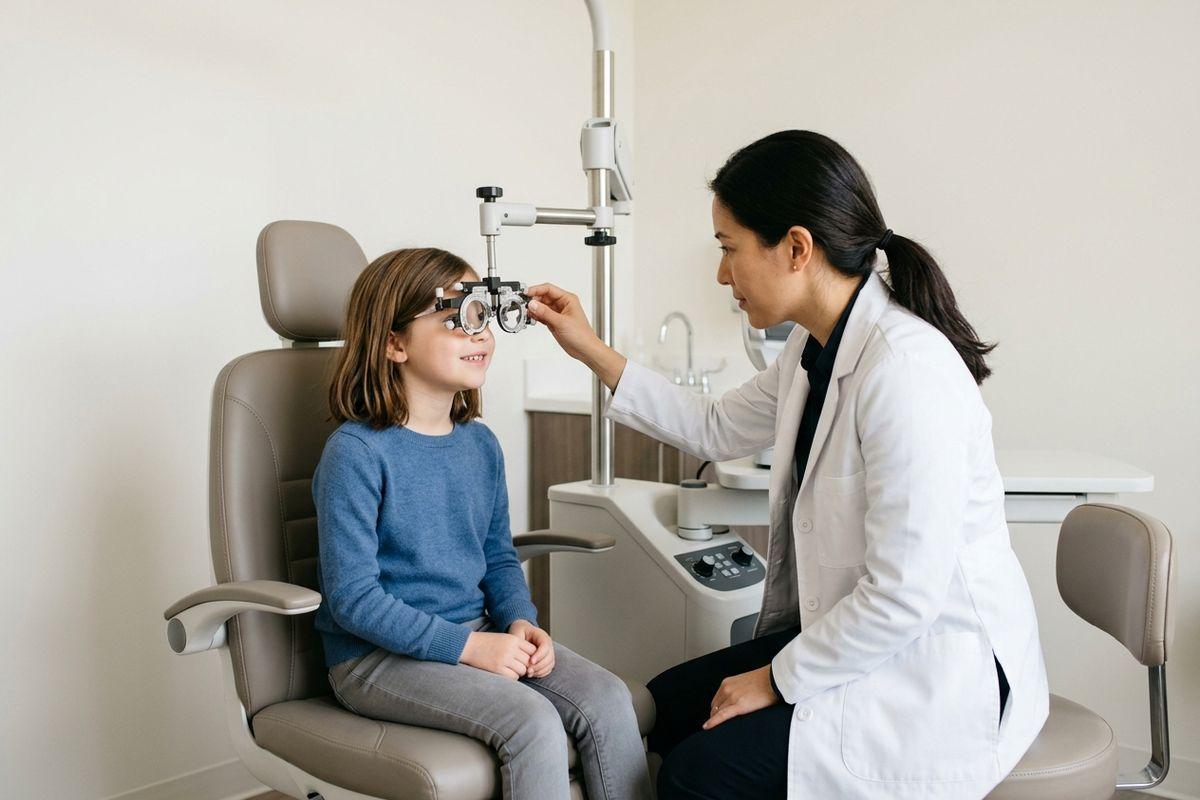
If your child frequently squints, complains of headaches, or reports blurry vision after screen time, these symptoms are worth bringing up to their optometrist. That said, you don’t have to wait for symptoms. Regular eye exams can catch changes in your child’s vision early, sometimes well before they notice that something feels off.
Total Vision Financial District offers comprehensive eye exams for children and families, along with a range of glasses options that include blue light filtering. Booking a routine exam is one of the straightforward ways to stay ahead of your child’s vision health.